Dallas Website Prices for Small Businesses in 2026: What HVAC, Salons, Restaurants, and Roofers Actually Pay
Dallas owners asking Dallas small business website cost in 2026 are shopping in a louder market than they were in January. Template mills still sell $299 custom. AI site builders still promise a live storefront before lunch. Google ads still punish a slow, untracked homepage. This guide is the late-2026 ticket for HVAC, salons, restaurants, and roofers in DFW: what those shops actually pay, what each band buys, and why the cheap rebuild cycle keeps eating the same operators.
It is not a quote. InterGlobal prices a real scope after a call. It is also not a reprint of our January 2026 range guide. That piece still covers agency-wide bands from a few thousand dollars to fifty thousand and up. This piece is narrower: the small-business ticket after AI builders, after cheap-website traps, and after a year of owners paying twice.
If you already read how much web design costs in Dallas, use this as the 2026 small-business update. If a $500 site already burned you, read it next to the high cost of cheap Dallas websites.
Quick answer: In September 2026, a Dallas small business should budget in bands, not a viral number. A single landing page that can run ads is often $2,500 to $8,000. A brochure site that will not convert is $4,000 to $12,000 and is usually the wrong buy. A conversion site with tracking, speed, and a real offer is commonly $8,000 to $25,000. Next.js or booking-heavy builds land $15,000 to $45,000. A companion app is a different ticket. DIY AI builders look cheap until GBP, ads, CRM, and a second rebuild show up on the same card.
- Price the job you need (leads, tables, bookings), not the page count a freelancer recites.
- HVAC and roofing pay for call tracking and service-area honesty more than for animation.
- Salons and restaurants pay for schedule, menu, and a page Google can quote.
- $299 custom is a sales page. Treat it as a disposable flyer, not a marketing system.
- This is not a bid. Book a call for a scope that matches your trade.
What's in this article?
- Why Dallas website prices shifted in 2026
- The five tickets: landing, brochure, conversion, Next.js, app
- HVAC: what a call-now site is worth
- Salons: chairs, retail, and a bookable page
- Restaurants: menu, hours, and the reservation leak
- Roofing: storm season, insurance photos, and trust
- What a $299 site actually buys
- AI builders versus a Dallas studio
- What DIY builders fail: GBP, speed, CRM, ads landings
- How to read a Dallas website quote
- A 30-day path if you need to spend this quarter
Why Dallas website prices shifted in 2026
Three things changed the ticket, not the skyline. First, AI site builders got good at a first draft and stayed bad at a business. They will spit a pretty home page. They will not own your Google Business Profile, your click-to-call, your ad landing, or the CRM a dispatcher actually opens. Second, cheap-website mills learned to advertise on the same queries as real studios. Third, Google Search and ads got less forgiving of slow, untracked, doorway-style pages, which we cover in the AI Overviews auto-expand guide and the AI Max and placements note.
Labor in Dallas did not get cheaper. A senior designer who can write an offer, a developer who can ship Core Web Vitals, and someone who will connect Meta CAPI or Enhanced Conversions still cost real hours. The $299 product hides those hours by skipping them. You feel it when ads cannot optimize and the phone stays quiet.
What did get cheaper: stock sections, AI copy, and a logo nobody remembers. That is why a brochure site can look finished in a weekend and still fail a Saturday leak call in Lake Highlands.
The five tickets: landing, brochure, conversion, Next.js, app
Stop asking what a website costs in Dallas. Ask which ticket you are buying. Mixing them is how quotes jump from $3,000 to $40,000 in one sales call.
1. One landing page for ads and campaigns: $2,500 to $8,000
What it is: One URL, one offer, one action (call, form, book, order). Built for paid traffic and a specific job: AC tune-up, hail tarp, tasting-room night, new-client color. Tracking is part of the page, not a plugin you might add later.
What it is not: Your brand home. Your about page. A place to dump every service. If the landing page is also the company website, you will keep editing it until ads and SEO fight each other.
When it is the right first spend: You already have a phone that rings from referrals, and you want a clean destination for Google or Meta. You are not ready for a ten-page rebuild. You need a page that can learn. See also why iOS 26 makes first-party events the real ad stack.
2. Brochure site: $4,000 to $12,000, often the wrong buy
What it is: Home, about, services, contact, maybe a gallery. Pretty. Slow to change. Weak on offer. This is what most $299 to $3,000 Dallas packages actually are, even when they are labeled custom.
Why owners still buy it: It looks like having a website. Family can see it. The mill can screenshot it. Google can index a thin page and still not send the job.
When it is honest: A brand-new shop that is not running ads yet and needs a URL for GBP. Even then, put hours, services, and a click-to-call on page one. Do not hide the phone in a hamburger.
3. Conversion marketing site: $8,000 to $25,000
This is the band most DFW small businesses should be in. A small set of money pages, not twenty city doorways. Speed. Schema that matches the page. Forms that hit a CRM. Call tracking if you buy ads. Photos of real Dallas jobs, not a warehouse in another state. Copy a dispatcher would say on the phone.
What moves the number inside the band: number of locations, bilingual pages, menu or booking integrations, photography, and whether we have to untangle a mill install first. A one-location HVAC company with a clear offer sits lower. A three-location salon with retail and a flaky booking widget sits higher.
What this is not: An app. A custom portal. A seven-day fantasy if the current site is a maze of page builders and broken plugins. Rebuilds of cheap sites are documented in Dallas web redesign costs.
4. Next.js or productized web app: $15,000 to $45,000
When the brochure already failed. You need routing, logged-in states, a real CMS, or a marketing site that is also a thin product. Next.js is a stack, not a price. The ticket is engineering plus the same conversion work as band 3. If someone quoted you $2,000 for Next.js, they are selling a template with a buzzword. Start from how we ship Next.js sites if that is actually the job.
5. Companion app: separate ticket
Do not bundle an iOS app into a website quote unless you like surprise invoices. A booking PWA or a thin customer app can sit near the top of band 4. A native app with stores, push, and a backend is a product, closer to our app development work and to MVP cost in Dallas. Restaurants that want a branded app before they have a working reservation page are buying the wrong floor.
Landing page, brochure, conversion site, Next.js, and booking app are different products. A single custom website price that covers all five is a bait number, not honesty.
If you already know the ticket, stop collecting $299 screenshots.
InterGlobal will map HVAC, salon, restaurant, or roofing scope to one of the five jobs. That call is discovery. This article is not your invoice. See recent work if you want proof before you talk.
Book a callHVAC: what a call-now site is worth
The job is a phone call, tonight, from someone whose AC died in Richardson or whose heater will not fire in a February cold snap. A beautiful timeline of the company's values does not close that. A fast page with service area, after-hours note, financing honesty, and a click-to-call does.
Typical 2026 band: conversion site $10,000 to $22,000 if you are buying ads and need call tracking. A campaign landing for a seasonal tune-up can sit in the $3,000 to $7,000 landing band if the main site is already decent. Adding five duplicate city pages does not make you more local. It makes you look like the spam update's homework.
What HVAC owners overpay for: 3D hero videos, member portals nobody logs into, and blog mills that rewrite the same refrigerant FAQ. What they underpay for: GBP categories, real job photos, and a form that does not email a Gmail that the owner checks twice a week.
Ads note: If Google AI Max is expanding match for you, a vague services page becomes expensive inventory. The landing has to state the job. See the AI Max / DSA sunset piece.
Salons: chairs, retail, and a bookable page
The job is a booked chair, not a moodboard. Dallas salons leak money through Instagram-only booking, a PDF menu, and a third-party widget that does not match hours on GBP. Guests still search. AI Overviews still summarize vibe, neighborhood, and price band without a tap.
Typical 2026 band: $8,000 to $20,000 for a conversion site with services, stylist pages that are not doorway spam, retail if you actually sell it, and a booking path that works on iPhone. If booking is the product, the integration is in the quote. A $4,000 brochure with a Mailchimp form is not a salon site. It is a flyer.
What salons overpay for: parallax, password-gated lookbooks, and custom apps before the book button works. What they underpay for: speed on LTE in the Design District parking lot, and copy Google can quote (hours, parking, whether you take walk-ins).
Restaurants: menu, hours, and the reservation leak
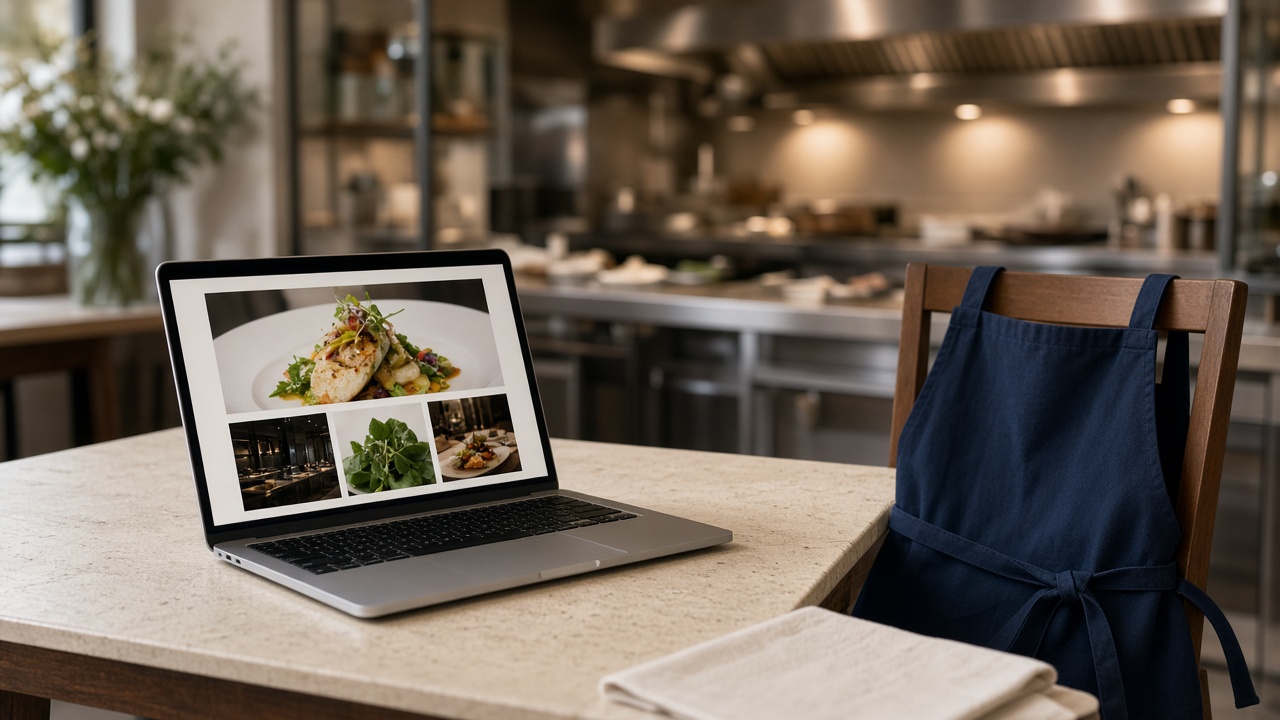
The job is a table, a pickup, or a catering call. InterGlobal restaurant work lives on restaurant sites, menus, and film. PDF menus, hours in a story highlight, and a reservation widget with no schema are how Dallas rooms lose the first screen. Auto-expanded Overviews will brief cuisine and vibe without sending a tap. If your hours are a JPEG, you are optional.
Typical 2026 band: $8,000 to $24,000 depending on locations, online ordering, and whether photography is real. A single landing for a pop-up or a prix-fixe night can be cheaper. A five-location group with ordering is not a small-business brochure, even if each room feels like a shop.
What kitchens overpay for: cinematic homepages that hide the menu. What they underpay for: extractable FAQ, parking, kid notes, and a page that matches GBP. Pair this with the Overviews guide if Search is eating your fold.
Roofing: storm season, insurance photos, and trust
The job is a documented, licensed crew after hail, not a stock sunset on a shingle. Roofing sites in DFW get used as lead mills. Owners who buy a $799 special then run storm ads are buying complaints. You need proof of local jobs, service area you will actually drive, and a path for insurance documentation that does not dump everything into a random Gmail. Pair the site ticket with roofing SEO leads.
Typical 2026 band: $10,000 to $25,000 for a conversion site that can run ads without lying. Storm landing pages are extra and should be scoped as landings, not as twenty cloned city URLs. If you need a portal for claims photos, that is closer to band 4.
What roofers overpay for: 3D roof visualizers nobody uses on a phone in a driveway. What they underpay for: unique job photos, licensing honesty, and a form that creates a CRM record.
What a $299 site actually buys
It buys a theme, a stock logo, and a salesperson. Hosting is often extra. Edits are often extra. The plugin that breaks on iOS is extra. When ads start, tracking is extra. When you want the phone number in the header, that is a change order. The cheap number is a door. The invoice is a hallway.
The expensive part is the second site. We still meet Dallas owners who paid a mill, then paid for ads into that mill, then paid a studio to rebuild. That is the high cost of cheap websites, and it has not gone out of style in 2026. Read the older trap piece if you need the pattern in writing: cheap Dallas websites cost more.
A disposable flyer can be rational. A weekend pop-up, a one-event page, a stopgap URL for GBP while the real site is in build. Call it a flyer. Do not call it your marketing system. Do not point $4,000 a month of Google spend at it and hope AI Max figures out your offer.
AI builders versus a Dallas studio
Use an AI builder to draft. Do not use it to own the business. Wix, Squarespace, Framer AI, and ChatGPT-exported HTML will get you a first look. The demo is a homepage. The business is four systems: Google Business Profile, speed, CRM, and ads landings. Late-2026 Dallas owners who say AI built my site usually mean AI built the screenshot.
Google Business Profile
The site is not the profile. GBP is the entity Google already shows for HVAC near me and taco spots in Oak Cliff. A DIY site that lists a different phone, a closed Sunday, or a service you dropped in 2024 teaches the model to distrust you. AI exporters paste an address field. They do not audit categories, services, cover photos, or Q&A. Local trust is NAP parity, not a generated skyline.
What a real ticket includes: the same primary category story on the homepage, services that exist in both places, and hours a human can change without a developer. That is why web design and the local entity are one job, not a plugin you toggle.
Speed
Pretty is not LCP. Builder themes ship sliders, a stock reel, and a chat bubble. ChatGPT will suggest a hero video because it looks premium in the prompt. On a phone at a red light on Central, the page is still white. Ads tax slow landings. Search sits you under a competitor who shipped one compressed plate photo.
What a real ticket includes: image budget, font budget, lazy loading that does not hide the phone number, and a host that is not a surprise upsell after launch. A salon brochure does not need a React runtime to compress a JPEG. A restaurant group that publishes weekly might.
CRM
Gmail is not a pipeline. DIY forms email the owner. The owner is on a roof, in a kitchen, or in color. HVAC and roofing need the lead in the board the dispatcher already lives in. Salons need the booking tool, not a we will text you. Restaurants need the reservation product they already pay for. A $299 site with a contact form is a mailbox with a theme.
What a real ticket includes: a named destination (Housecall Pro, ServiceTitan, Boulevard, OpenTable, HubSpot, even a structured Sheet if that is honestly the CRM), spam control, and a fail path when the API is down. If the quote does not name the destination, you are buying a form-shaped decoration.
Ads landings
Homepage is not a lander. Paid traffic needs a page that matches the query and keeps the click IDs your reports need. Builder sites fight URL structure and send storm-week traffic into a slider about values. ChatGPT-built HTML often strips hidden fields. You then say ads do not work in Dallas. Ads worked. The page refused the lead.
What a real ticket includes: one promise, proof, tap-to-call, a form, a thank-you that can fire a conversion, and a URL you can duplicate for the next offer. That is the landing-page ticket. It is cheaper than a year of wasted media on a DIY homepage.
A tracked emergency HVAC or hail lander that hits the CRM beats an $8,000 brochure that still sends ads to a Wix homepage. Finish the landing. Schedule the conversion site. Do not reverse that order because a mill bundled inner pages you will not rank.
AI can draft a layout in an afternoon. It cannot sit in your Google Business Profile, keep LCP honest, land the lead in the CRM the truck already uses, and keep storm-week ads on a URL that converts. Those four jobs are why Dallas owners rebuild.
InterGlobal Team, Dallas
How to read a Dallas website quote
Ask what URL is for ads, what URL is for Search, and where a lead goes after submit. If the quote cannot answer those three, you are buying a brochure with a handshake.
Ask what is excluded. Photography, copy, booking apps, CRM, call tracking, Spanish pages, and post-launch edits are the usual silent extras. A low number with a long exclusion list is not a deal.
Ask who presses publish when Google changes the SERP. AI Overviews, AI Max, and iOS privacy are not web-design trivia. If your vendor only moves pixels, you will hire a second vendor for the money.
Ask for the band in writing, then a scope. Bands without a scope are blog posts (this one). A scope without a band is how surprise change orders start. Book a call if you want both from the same floor.
Spanish-speaking owners: we keep companion explainers at costos de diseño web en Dallas and cuánto cuesta una página web. The 2026 small-business ticket in this article is the English update for trades and hospitality.
A 30-day path if you need to spend this quarter
Days 1 to 7: Name the job
Pick one: more booked chairs, more tables, more after-hours HVAC calls, more documented roof inspections. Screenshot the current site on a phone. If the action is below a story, you do not have a conversion site.
Days 8 to 14: Kill the fake custom
If you are on a mill, freeze new plugins. Export what you can. Do not buy another $299 special this month. Point ads at a landing if the home page cannot be trusted.
Days 15 to 21: Scope the band
Landing, conversion, or Next.js. Not all three. List integrations (booking, ordering, call tracking). List languages. List locations you will actually serve.
Days 22 to 30: Buy the ticket, not the theme
Sign a scope that includes tracking and the first money pages. Book a call if you want InterGlobal to run that as one floor: site, ads destination, and the CRM path.
Key takeaways
- Late-2026 Dallas website prices for small businesses are tickets, not a single custom number.
- Landing, brochure, conversion, Next.js, and booking or app are different jobs. Name the job before you compare price.
- HVAC and roofing buy emergency landers and call tracking. Salons buy booking. Restaurants buy menu, hours, and reservations that match the floor.
- DIY AI builders fail at GBP, speed, CRM, and ads landings. That is why cheap sites get rebuilt.
- $299 fake custom is a theme. It is not engineering.
- This article is not a proposal. Book a call for a scoped ticket, or use Book a call on the homepage.
Need a Dallas small-business site that can take a call, not just a compliment?
Tell us the trade, the offer, and whether ads are already on. We will put you in a band and a scope, or tell you a builder is enough.
Book a call