Google AI Overviews Auto-Expand: Dallas Restaurants and Trades After Show More
On 27 and 28 August 2026, Google confirmed that some Google AI Overviews now auto-expand into longer, AI Mode-style answers and drop the Show More control. If you own a Dallas restaurant, HVAC company, plumber, or roofing crew, that is a first-screen problem. The generated block can fill the phone before a diner or a leak-call ever sees your blue link. Citations inside the answer now beat a rank-only strategy that assumed position one still owned the fold.
The same two weeks stacked more Search news than most DFW owners will read. Generative UI that started in AI Mode rolled into AI Overviews. Search Console shipped a worldwide generative-AI report as of 31 August 2026. Google puts AI Overviews at 2.5 billion-plus monthly active users and AI Mode at 1 billion-plus. An unconfirmed ranking blip hit around 4 September 2026, with some reversals around 13 September. There is no confirmed September 2026 core update. The August 2026 spam update ran 18 to 21 August. In the UK, the DMCC set 3 December 2026 as the date Google must supply AI search transparency metrics.
This guide separates confirmed product changes from ranking rumor, then maps what a Dallas operator should actually ship: Google Business Profile hygiene plus extractable FAQ copy on a page the model can quote. Rank still matters. Rank without a citation is now easy to miss.
Quick answer: Google confirmed on 27 and 28 August 2026 that some Google AI Overviews auto-expand into longer AI Mode-style answers and drop Show More. Dallas restaurants and trades lose first-screen real estate. Optimize for citations, not rank-only. Pair a clean Google Business Profile with extractable FAQ on conversion-ready pages.
- Auto-expand is confirmed for some Overviews, not a claim that every query lost Show More.
- Generative UI moved from AI Mode into AI Overviews in the same product wave.
- Search Console's generative-AI report is worldwide as of 31 August 2026. It reports impressions, page, country, and device. It does not report clicks, CTR, or queries.
- AI Overviews: 2.5 billion-plus MAU. AI Mode: 1 billion-plus MAU.
- Unconfirmed ranking blip around 4 September 2026, with some reversals around 13 September. No confirmed September 2026 core update.
- August 2026 spam update: 18 to 21 August. Do not mix that filter with the Overview UI change.
- UK DMCC: Google must supply AI search transparency metrics by 3 December 2026.
What's in this article?
- What Google confirmed on 27-28 August 2026
- Generative UI from AI Mode into AI Overviews
- Search Console generative-AI report (and its gaps)
- 2.5B Overviews MAU and 1B AI Mode MAU
- September ranking blip, reversals, no core update
- August spam update vs Overview expansion
- UK DMCC transparency deadline
- Why Dallas restaurants and trades lose the first screen
- Citations beat rank-only SEO
- Google Business Profile plus extractable FAQ
- A 30-day playbook for DFW owners
What Google confirmed on 27-28 August 2026
The product change: Google confirmed on 27 and 28 August 2026 that some AI Overviews auto-expand into longer answers that look and behave more like AI Mode. The Show More tap is gone on those units. The user does not choose to open the generated block. The block is already open.
What that is not: It is not a statement that every query, language, and device now auto-expands. It is not a ranking algorithm announcement. It is a presentation change on a surface that already sat above classic results for a huge share of informational and local-adjacent searches.
Why Show More mattered to local businesses
Collapsed vs open: A collapsed Overview left a path to the blue links. An auto-expanded Overview occupies the first screen on a phone, which is where Dallas restaurant and trade searches actually happen: in a car, on a patio, in a kitchen with a leaking pipe. If your name is not in the generated answer, you are below a wall of text the user already treated as the result.
The tap you no longer get: Show More was a weak control, but it was a control. Dropping it means the model writes a longer brief by default on the queries Google chose for this treatment. You cannot A/B that in Search Console as a click. You can only watch whether you are named.
Treat the auto-expand confirmation as a product fact. Treat early-September ranking chatter as unconfirmed unless Google says otherwise. Do not rebuild your entire site because a tracker labeled a week "volatile."
What to check in your own SERPs
Phone first: Run your money queries on a logged-out mobile browser: "best brunch Bishop Arts," "emergency plumber Lake Highlands," "roof leak Plano tonight," "HVAC repair Oak Lawn." Screenshot whether an Overview is present, whether it is already expanded, and whether your brand, hours, or phone appear as a citation.
Do not trust a desktop office Wi-Fi test: The first screen on a Pixel or iPhone in traffic is the product. Desktop SERPs still matter for research queries. They are not how a Fort Worth diner picks a patio.
Keep a folder of dated SERP screenshots for your top 20 queries. When someone on a forum claims "Google nuked local," you will know whether your Overview citations moved or whether you are reacting to a national tracker.
Generative UI from AI Mode into AI Overviews
The interface followed the model: Generative UI that rolled in AI Mode (interactive, structured, longer-form answer chrome) is now showing up in AI Overviews. That is why auto-expand feels like "AI Mode landed on the classic results page." The Overview is no longer a short paragraph with a shy Show More. It is a richer generated module.
Why that matters for extraction: Richer UI needs structured facts. Hours, neighborhoods, price bands, service areas, reservation rules, emergency vs scheduled trade work. Pages that bury those facts in a hero video or a PDF menu are harder to quote. Pages that state them in HTML are easier to cite. That is the same discipline as our Answer Engine Optimization playbook, now on the default Search surface, not only in AI Mode.
What generative UI asks of your site
Quotable blocks: Short definition paragraphs. FAQ answers that start with the answer, then the proof. Tables of hours and service areas. Schema that matches visible copy. None of that guarantees a citation. All of it is how you stop being invisible when the module gets longer.
Interactive chrome is not your website: Do not wait for Google to host your menu inside the Overview. The Overview will summarize. Your website still has to convert the people who tap through, and it still has to feed the model clean facts when they do not tap through.
Generative UI in one sentence
AI Mode taught Google how to present a long generated answer. AI Overviews now borrow that presentation on some queries, with Show More removed. Your job is to be a cited source inside that answer, then a conversion-ready page if the user leaves it.
Search Console generative-AI report (and its gaps)
What shipped: As of 31 August 2026, the Search Console generative-AI report is available worldwide. This is the measurement Google is willing to give site owners for generative surfaces.
What it includes: Impressions, page, country, and device. That is the confirmed cut. You can see that a URL appeared in a generative experience, on which devices, in which countries.
What it does not include: Clicks. CTR. Queries. If an agency dashboard is already graphing "AI Overview CTR" from Search Console, they are inventing a metric Google did not ship in this report. Ask them which column they mean.
How to use the report anyway
Impressions are a citation proxy, not a lead proxy: A spike in generative impressions on your /menu or /emergency-plumbing URL means the URL is in the machine's candidate set more often. It does not mean those users called you. Pair the report with call tracking, reservation software, and CRM, not with vanity CTR.
Page-level, not query-level: Without queries, you cannot see "brunch vs catering" inside the generative report. You infer from which URLs gain impressions. That is another reason to stop stuffing every service onto the homepage. Distinct URLs create a readable impression map.
Country and device: DFW owners should filter to United States and mobile first. If desktop generative impressions dominate, your content may be feeding research queries while your money queries still fail on the phone.
In the generative-AI report
Impressions: Your page appeared in a generative Search experience.
Page: Which URL was eligible or shown.
Country and device: Where and on what hardware.
Not in this report
Clicks: Google did not include them here.
CTR: Do not compute a fake one from missing clicks.
Queries: You do not get the prompt list. Plan content from business intent, not from a query export that does not exist.
Measure leads you own
Search Console will not tell you which Overview impression became a four-top on Friday. Your reservation system, call recordings, and CRM will. That stack is the same first-party discipline we use when we wire AI integrations into a real operations layer, not a slide about "AI SEO."
2.5B Overviews MAU and 1B AI Mode MAU
The audience is not experimental: Google reports AI Overviews at 2.5 billion-plus monthly active users and AI Mode at 1 billion-plus. You can argue about methodology. You cannot argue that this is a side experiment a Dallas owner can ignore until 2027.
Two surfaces, one citation problem: Overviews sit on classic Search. AI Mode is the longer conversational surface. Auto-expand blurs the visual line between them. A brand that is never named in either surface is competing for leftover attention under a generated brief 2.5 billion people already know how to use.
What scale means for a DFW operator
You will not "opt out" locally: There is no Dallas-only Search that still looks like 2019. Visitors from Plano, Irving, Arlington, and Fort Worth use the same Google surfaces. Local pack and Maps still matter. They now share the first screen with a longer generated answer on many queries.
National MAU is not your TAM: 2.5 billion people will not look for tacos on Lower Greenville. The number tells you Google will keep investing in the module. Your TAM is still the people who can drive to you. Win the citation for those queries.
September ranking blip, reversals, no core update
What is confirmed: There is no confirmed September 2026 core update. If a tool or a freelancer sells you a "September core recovery package," ask for Google's announcement. It does not exist as of this writing (18 September 2026).
What is unconfirmed: SEOs reported a ranking blip around 4 September 2026, with some reversals around 13 September. Treat that as industry chatter, not as a named Google update. Volatility in rank trackers happens when presentation changes (auto-expand, generative UI) and when spam filters and ordinary flux overlap.
How to read a blip without burning the week
Split rank from citation: A URL can drop three positions and still appear as an Overview source. A URL can hold position one under a longer Overview and lose calls. Rank trackers that ignore the generated module will mis-diagnose both.
Look at leads, then at generative impressions: If tables, jobs, and bookings held while a tracker screamed, you had a reporting scare. If leads fell and your pages vanished from the generative-AI report, you have a citation problem. If leads fell and spam flags hit thin pages, look at the August spam window before you blame auto-expand.
Do not rewrite service pages because a third-party volatility score spiked. Screenshot SERPs, check Search Console generative impressions (page, country, device), and compare against actual calls and reservations.
August spam update vs Overview expansion
Separate tickets: The August 2026 spam update ran 18 to 21 August. The AI Overviews auto-expand confirmation was 27 and 28 August. Those are different systems. Mixing them into one "Google wrecked us in late August" story will send you after the wrong fix.
Spam update symptoms: Thin location pages, spun "near me" copy, expired guest posts, scaled doorway content. If you published 40 neighborhood pages that all say the same paragraph with a city name swapped, that is a spam-update problem, not an Overview-UI problem.
Overview symptoms: The module is longer, Show More is gone on some queries, and you are not named. Your unique pages can still be clean and still lose the first screen if they are not extractable.
Spam window
18 to 21 August 2026. Quality and scaled junk. Fix duplicate city pages and unearned links, not your FAQ schema first.
Overview auto-expand
Confirmed 27 to 28 August 2026. Presentation and citation. Fix GBP, extractable answers, and unique facts Google can quote.
September chatter
Unconfirmed blip around 4 September, some reversals around 13 September. No confirmed core update. Do not buy a core-update retainer.
UK DMCC transparency deadline
The date: The UK's Competition and Markets Authority successor process via the DMCC requires Google to supply AI search transparency metrics by 3 December 2026. That is a UK regulatory clock, not a Dallas ordinance. It still matters if you care whether platforms will be forced to show more of how generative Search chooses sources.
What it is not: It is not a promise that Search Console will add clicks, CTR, and queries to the generative-AI report by December. It is not a ranking lever you can pull in Collin County. It is a reminder that even regulators now treat AI Search as a market that needs metrics, while site owners are stuck with impressions by page, country, and device.
Practical takeaway: Do not wait for December transparency to decide whether to invest in citations. The auto-expand UI is already live on some Overviews. The UK deadline is about Google's reporting obligations, not your Q4 reservation book.
Why Dallas restaurants and trades lose the first screen
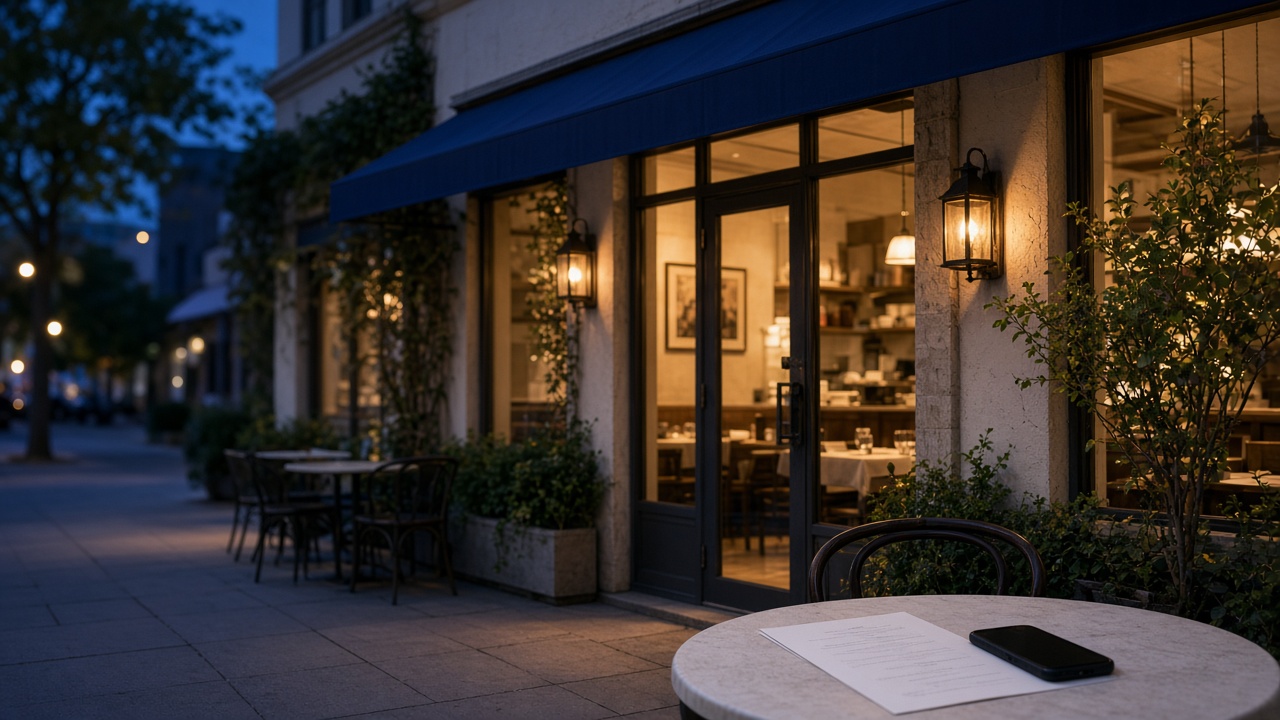
The physical constraint: A phone in Uptown traffic has one screen. An auto-expanded Overview plus Maps plus ads can consume it. The classic organic list starts later. Restaurants and trades feel this first because the query is local, urgent, or both, and the user is not writing a research brief.
Restaurants: "Date night Dallas," "late night tacos," "patio with heaters," "kid friendly brunch." The Overview can name cuisine, vibe, and a shortlist without sending a tap. If your hours, neighborhood, and signature dish are not in crawlable text (and not only on Instagram), you are easy to skip. If a competitor's GBP is complete and yours is a stub, the model has one clean entity to quote.
Trades: "AC not cooling 75206," "water heater leak tonight," "roof tarping after hail." The user wants a name, a phone, and a sign they are licensed and close. A rank-one service page that opens with a 800-word brand story loses to a cited GBP that states service area, hours, and a direct answer about emergency fees.
Restaurants: the Overview ate the fold
What breaks: A beautiful site that hides the menu behind a PDF, hours in an image, and reservations on a third-party widget with no schema. The model cannot quote a JPEG. Auto-expand makes that failure occupy more pixels.
What still works: Visible hours, neighborhood, price band, dietary notes, and a reservation or order action on a fast page. Reviews that mention specific dishes. A GBP that matches the site. See how local capture still works in how Dallas businesses get clients from Google.
Trades: urgency plus a generated shortlist
What breaks: Ten city pages with identical copy, a phone number only in the footer, and no FAQ about after-hours rates. Spam-update risk and Overview invisibility in the same week.
What still works: One honest page per money job (emergency leak, replacement vs repair, insurance documentation), NAP consistency, photos of actual DFW jobs, and FAQ answers a dispatcher would say on the phone. Proof of real work lives in our work the same way it should live on your site: named, specific, not stock.
Rank-only SEO assumed the first screen was a list. Auto-expanded Google AI Overviews turned the first screen into a briefing. Dallas restaurants and trades that are not cited are not "ranking a little lower." They are missing the conversation.InterGlobal Team, Dallas
Citations beat rank-only SEO
The new scoreboard: Being position one under a 600-word generated answer is a quieter win than being the second source named in that answer. Clicks can fall while branded search and direct calls rise, or the opposite. Because Search Console's generative report does not include clicks, CTR, or queries, you cannot prove Overview ROI from that report alone. You prove it from named citations in screenshots plus owned conversion data.
What a citation is: Your brand, URL, or GBP entity used as a source in the generated answer. Not a sitelink. Not a pixel. A name the user hears before they scroll.
How you earn one: Unique facts, consistent entity (name, address, phone, hours), third-party corroboration (reviews, local press, associations), and pages written so a model can lift a sentence without lying. That is AEO. Traditional on-page SEO remains the floor. It is no longer the whole game. Walk the full method in the AEO playbook for 2026.
Rank still matters
Do not torch classic SEO: Crawlability, speed, links, and useful pages still feed the systems that choose sources. Auto-expand did not retire title tags. It reduced the value of a title tag that no one sees because the Overview already answered "who."
The bad strategy: Buying more city pages to "win more keywords" while the Overview names the competitor with better reviews and a clearer FAQ. Volume without extractable facts is how you work weekends for a SERP you no longer own.
Key takeaways
- Google confirmed 27 and 28 August 2026: some AI Overviews auto-expand into longer AI Mode-style answers and drop Show More.
- Generative UI rolled from AI Mode into AI Overviews. Plan for a richer generated module, not a shy snippet.
- Search Console generative-AI report is worldwide as of 31 August 2026: impressions, page, country, device. Not clicks, CTR, or queries.
- AI Overviews 2.5 billion-plus MAU. AI Mode 1 billion-plus MAU. This is default Search behavior at scale.
- Unconfirmed ranking blip around 4 September 2026, some reversals around 13 September. No confirmed September 2026 core update.
- August spam update ran 18 to 21 August. Do not conflate it with the Overview UI change.
- UK DMCC: Google must supply AI search transparency metrics by 3 December 2026.
- Dallas restaurants and trades lose first-screen attention. Citations beat rank-only. GBP plus extractable FAQ is the local counter.
Google Business Profile plus extractable FAQ
Two assets, one entity: The Overview and the local pack both need a clean business entity. GBP is the structured local record Google already trusts. Extractable FAQ on your site is the copy the Overview can quote when the query is a question. Together they beat a pretty homepage that says nothing a model can lift.
GBP hygiene that actually feeds AI Search
Match the real-world business: Legal name vs public name, primary category, service items, hours including holiday exceptions, service area vs storefront, phone that rings, photos from this year. If the site says Oak Cliff and GBP says "Dallas" only, you trained two different entities.
Products and services fields: Restaurants should list signature items and reservation links. Trades should list emergency vs scheduled, brands serviced, and the cities you actually roll to. Empty service lists force the model to guess from reviews.
Q&A and reviews as FAQ fuel: Owner answers on GBP Q&A should match the FAQ on the site. "Do you charge an after-hours fee?" needs the same number in both places. Contradictions are how you get omitted.
What extractable FAQ means
Answer first: The first sentence is the answer. "Yes, we take walk-ins before 11 a.m. on weekdays." Then the caveat. Models quote openings more than closings.
Visible HTML, not an accordion screenshot: Use real headings or details/summary. Keep the same questions in FAQ schema only if they appear on the page. Hidden FAQ dumps are a spam-update pattern, not an Overview strategy.
Local specifics: "We cover 75214, 75218, and Lakewood. We do not take Denton emergency calls after 8 p.m." beats "We proudly serve the DFW metroplex." Specificity is what gets cited. Vagueness is what gets skipped.
The page around the FAQ: FAQ on a slow, vague homepage still loses. Put questions on the money URL: brunch, emergency HVAC, hail tarping. Design that page to convert after the citation, which is ordinary web design with a form, a click-to-call, and proof above the fold.
If the Overview cannot quote you, the first screen is not yours.
InterGlobal builds the site, the GBP entity, and the extractable answers as one ticket so Dallas restaurants and trades show up inside the generated brief, not only under it.
Book a callFAQ examples worth putting in HTML
Restaurant
Hours today, patio vs indoor, reservation vs walk-in, kid menus, parking, gluten-free, private room size. One sentence answers, then a reservation CTA.
Trades
Emergency window, trip fee, licensed and insured, brands, same-day vs next-day, HOA rules, what to do while you wait. Phone in the answer, not only the header.
Both
Neighborhoods you actually serve. "Dallas" alone is not a service area. Name the map the dispatcher uses.
A 30-day playbook for DFW owners
You do not need a 40-page SEO audit. You need a sequence that matches dates that already happened and the measurement Google actually gave you.
Days 1 to 7: SERP and GBP truth
Screenshot mobile SERPs for 20 money queries. Note auto-expanded Overviews and whether you are cited. Export GBP insights. Fix hours, categories, services, and photos that are wrong. Turn on call history if you are a trade.
Days 8 to 14: Search Console, honestly
Open the generative-AI report (worldwide as of 31 August 2026). Filter United States, mobile. List which pages get generative impressions. Do not invent CTR. Compare those URLs to actual reservations and jobs.
Days 15 to 21: Extractable pages
Ship FAQ on three money URLs, answer-first, visible in HTML, matching GBP. Kill duplicate city doorway pages if the August spam window already hurt you. Keep unique proof: dishes, job photos, neighborhoods.
Days 22 to 30: Conversion after the citation
Speed, click-to-call, reservation or form, schema that matches the page. Recheck the same 20 queries. If rankings wobbled around 4 September and recovered around 13 September, log it. Do not treat it as a confirmed core update.
Need Dallas-speed help, not a ranking theory?
We will map where auto-expanded Overviews already sit on your queries, clean GBP, and write extractable answers on conversion-ready pages.
Book a call