Why Dallas Small Businesses Need SEO and Social Media in October 2026
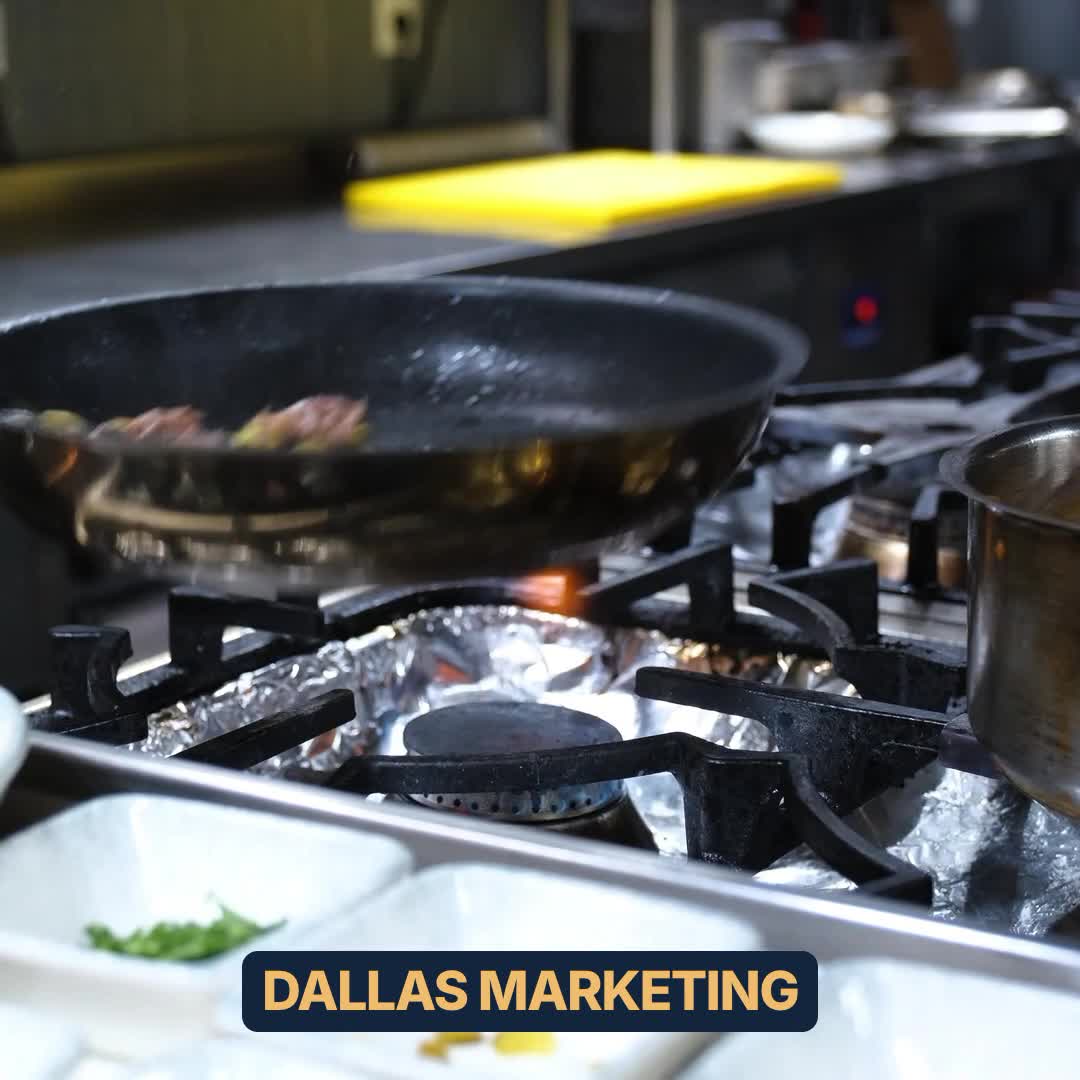
Direct answer: Dallas small businesses need a way to be found, a reason to be trusted, and a next step a customer can actually take. The October 2026 evidence is mixed. The lunch special in the film is a fictional example.
Transcript
Your food can be worth the trip, while your marketing gives people no reason to make it.
If you run a Dallas small business, connect three things: how customers find you, what makes them trust you, and the next step they can actually take.
The pressure is real, but it is uneven.
Dallas-Fort Worth consumer prices were up three percent over the year in September.
That is a regional price index, not a measurement of your restaurant's sales.
And more AI content is not automatically more trust.
In Gartner's national survey published in September, sixty-five percent thought brands were producing too much of it.
Here is something useful to change today.
Replace unforgettable flavors and amazing vibes with details a customer can use.
In this fictional lunch example: a chicken plate, two sides, fourteen dollars, weekdays from eleven to two.
Then give one next step: see the menu and choose pickup.
Use your real product, price, and hours before posting.
Now connect that post to the matching menu.
Show the same offer there.
Make the pickup option easy to find.
Check your search listing, hours, address, and phone.
A good video cannot fix a broken ordering route.
Ask for honest feedback and answer actual customer questions.
Use AI to help organize and edit, while a person who knows the business checks every claim.
Track completed orders, bookings, and qualified inquiries alongside views.
The article has the research, more examples, and a thirty-day worksheet.
Read it below, or scan the code if you are watching on social.
Inter Global helps you make the next customer's decision easier.
Dallas small businesses need a reliable way to be discovered, earn trust, and turn interest into a visit, order, or inquiry. Local SEO helps people find the business when they are looking. Social media gives them something concrete to judge. An accurate, easy-to-use website connects that attention to a useful next step. In a market where costs remain elevated, these three parts deserve to work together.
That does not mean every owner needs to post daily, buy more advertising, or replace employees with AI. It means the information a customer finds should be current, believable, and helpful enough to act on.
Greg, InterGlobal’s operator, reports seeing a recurring problem while visiting several restaurants: repetitive marketing, careless AI content, and little explanation of what makes each place worth choosing. Those visits motivated this article. They are firsthand observations from several businesses, not a representative survey of Dallas restaurants.
Here is what the wider evidence says—and what an owner can do with it.
What the October 2026 evidence actually shows
The economy is putting pressure on customers and operators, but a claim that every Dallas business is declining would go beyond the evidence. The useful picture is more specific.
| Evidence available by October 23 | Scope and period | Why it matters |
|---|---|---|
| Consumer prices increased 3.0% over the year; food away from home increased 2.7%. | DFW metro, September 2026; BLS release October 14. | Diners are comparing value against higher prices. These are consumer prices, not restaurant profit margins. |
| The service-sector revenue index fell to −0.9; outlook uncertainty reached 21.4, against a series average of 14.1. | Texas, September 2026; Dallas Fed release September 29. | The near-zero revenue reading indicates stalled activity. Index points are not percentage sales losses. |
| $1.55 trillion in restaurant sales and 1.3% real growth were projected for 2026. | U.S., National Restaurant Association forecast published February 11. | Rising sales dollars can coexist with modest inflation-adjusted growth. This is a forecast, not a completed-year result. |
| 97% read local-business reviews; 54% check the website after positive reviews; 24% check social media. | BrightLocal’s 2026 panel of 1,002 U.S. adults. | Customers often seek reassurance across channels. Responses about next steps allowed multiple selections. |
| 65% think brands produce too much AI content; 57% say it has made them less trusting of brand messaging. | Gartner survey of 1,006 U.S. consumers, May–June 2026; published September 22. | Producing more material can undermine trust when it feels careless or interchangeable. |
| 50% use Instagram and 37% use TikTok. | Pew Research Center’s 2025 U.S. adult survey, published November 20, 2025. | These are established discovery channels. The figures measure platform use, not Dallas restaurant purchases. |
Sources: BLS DFW CPI, Dallas Fed September survey, National Restaurant Association 2026 outlook, BrightLocal 2026 survey, Gartner September research, and Pew’s 2025 report.
The Federal Reserve’s October 2026 Dallas Beige Book describes moderate district growth, stronger price pressures, and fairly flat leisure and hospitality activity. Some lower-income customers were becoming more cautious. That is evidence of uneven conditions, rather than proof of a Dallas-wide recession.
The editorial implication is straightforward: when people scrutinize purchases, help them evaluate yours. A generic promise of an “unforgettable experience” gives them little to work with. A current menu, a clear price, an actual dish, and an easy ordering route answer real questions.
SEO and social media solve different customer problems
Local SEO is the work of making a business’s location, offerings, and useful pages understandable and discoverable in local search. For a restaurant, that includes accurate listings, a usable menu, opening hours, clear location information, and pages that explain real services such as catering or private dining.
Social media supplies a different kind of information: what the food looks like today, how the place feels, who makes it, and what a customer can expect. Someone may discover a restaurant in a video, search its name later, read reviews, then open the menu. Another customer may begin with Maps and use Instagram to decide whether the atmosphere fits the occasion.
BrightLocal’s national survey supports this cross-channel behavior. It does not establish a conversion rate for any Dallas restaurant. The practical lesson is to make the business recognizable and consistent wherever a customer checks.
Think of one ordinary lunch decision. The video shows a real plate. The profile names the restaurant and neighborhood. Search confirms today’s hours. The website shows what is included and where to order. Each step removes a reason to abandon the decision.
More social views cannot repair a broken ordering button. A technically sound website cannot show off a dish the business never photographs. Connect the work around the customer’s task.
Why repetitive AI marketing wastes a small business’s advantage
A local business has details a generic content generator cannot know without being told: the cook’s preparation method, the lunch rush, a regular customer’s question, the entrance people miss, or a menu item that sells out. Those details are valuable raw material.
Careless automation replaces them with phrases that could describe almost any competitor: “elevate your experience,” “something for everyone,” “hidden gem,” or “quality you can trust.” The problem is that these claims fail to answer the customer’s question.
Gartner’s findings about AI fatigue describe self-reported attitudes across U.S. consumers. They do not prove that an individual AI-assisted post loses sales. They do support taking credibility seriously.
Google also makes a useful distinction. Its guidance on generative AI content allows useful assistance while warning that producing many pages without added value may violate scaled-content policies. It asks publishers to check accuracy, quality, and relevance.
AI assistance is already common. The Federal Reserve Banks’ 2026 Report on Employer Firms found that 46% of responding firms used AI; among users, 83% used it for writing or marketing. The underlying survey was conducted in September–November 2025 among 6,525 small employer firms nationwide. It is a convenience sample, not a Dallas census or an October 2026 adoption estimate. The report also identifies reaching customers and growing sales as the most common operational challenge. Access to the same tools does not give every business an equally useful message.
Use AI to organize an interview, transcribe the owner’s explanation, draft caption alternatives, or identify unanswered questions. Then have someone who knows the business check the facts and wording. Keep actual product photography central when selling something the customer will receive. A fabricated image of an enormous dish can create an expectation the kitchen cannot meet.
A restaurant example: replace the cliché with a decision
The following is a fictional Dallas restaurant example. The prices, hours, and offering demonstrate a method; they are not facts about a real business.
Before: “Dallas food lovers! Elevate your lunch with mouthwatering flavors and unforgettable vibes. Come experience the difference!”
After: “Lunch near Oak Lawn? Our fictional weekday special includes a grilled chicken plate and two sides for $14, Monday–Friday, 11 a.m.–2 p.m. See today’s menu and choose pickup from the link in our profile.”
The revision answers five questions: what, where, price, availability, and next action. A real owner must replace every sample detail with an accurate fact before posting.
Film the actual plate being finished. Show enough of the portion to set a fair expectation. Add a readable caption with the verified offer. Send people to the matching menu or ordering page. If the offer ends, update the page and stop circulating an outdated promotion.
Avoid inventing speed claims such as “ready in ten minutes” unless operations can consistently support them. A clear invitation is useful without an unrealistic promise.
For a salon, the equivalent might explain the service, starting price and what changes it, availability, and booking route. A repair business can show the actual problem, explain the inspection, and let customers request an estimate. The method adapts to the business.
Fix the local search basics before buying more traffic
Google’s local-ranking guidance identifies relevance, distance, and prominence/popularity as major considerations. Complete and accurate information helps Google understand a business; reviews and links can contribute to prominence. Nobody can buy a guaranteed organic local position.
Start by checking the business as a customer would. Search its real name and its main offering from a relevant location. Confirm the address, map pin, phone, category, regular hours, and holiday exceptions. Use the real business name consistently. A Dallas search result is not a guarantee that people across the metro see the same result.
For restaurants, publish a readable HTML menu with current prices and availability details. A downloadable PDF can supplement it, but customers should not have to decipher a tiny screenshot to choose lunch. Make location, parking information where relevant, ordering, reservations, and contact options easy to find on a phone.
Create pages for real offerings. Catering deserves its own useful page if it is a genuine service with different ordering requirements. Do not generate dozens of near-identical neighborhood pages just to repeat city names.
Ask customers for honest reviews through the platform’s permitted process. Read complaints for operational problems, and respond with a useful human answer. Never invent customer experiences or use AI to impersonate a reviewer. An unhappy visit is a service issue before it becomes a content issue.
Build a social routine the owner can sustain
Choose a manageable publishing rhythm around real work. A short recording session can capture a dish being prepared, the owner answering a common question, and a practical walkthrough of pickup or parking. Get permission for identifiable participants and avoid filming private customer information.
Use those recordings to answer different questions rather than repeating the same sales pitch:
- What am I getting? Show the actual product, portion, or service process.
- Why does it cost this much? Explain ingredients, work, inclusions, or options truthfully.
- Will this work for my visit? Explain hours, location, ordering, accessibility details you have verified, or group arrangements.
- What should I do next? Point to one matching menu, booking page, or inquiry route.
Keep the business name and relevant Dallas location understandable. Add accurate subtitles. Review the post on a phone, including the crop and text covered by platform controls. Reply to useful questions and use recurring questions to improve the website.
Paid promotion can be considered separately after the destination and measurement work. An owner with limited cash should first understand the offer’s margin, available capacity, and the cost they can afford to acquire a customer. Publishing more often is not automatically an investment worth making.
A practical 30-day plan
| Week | Work | Evidence to keep |
|---|---|---|
| 1 | Correct listings, hours, menu, contact details, and ordering or booking links. Test the whole route on a phone. | A dated list of fixes and a completed test order or booking where appropriate. |
| 2 | Record real products and answer three recurring customer questions. Rewrite vague captions with verified details. | Source clips, approved copy, and the destination for each post. |
| 3 | Publish at a sustainable pace. Respond to questions. Request honest feedback using platform rules. | Published links, questions received, and operational issues to fix. |
| 4 | Compare discovery, inquiries, orders, and margin against the starting period. | A simple worksheet with dates, channel, spending, completed actions, and known limitations. |
Treat the first month as a working baseline. Weather, holidays, nearby events, hours, promotions, and capacity can all affect comparisons. A short-term change alone cannot establish that SEO or a particular post caused it.
Measure the action that helps the business
Keep reach and views as discovery indicators. Track profile visits and menu clicks as interest. Track completed orders, reservations, qualified calls, and booked work as business actions. A direction request is not a confirmed visit, and a call-button tap is not necessarily a completed call.
Use descriptive campaign links where the tools support them, and ask customers how they found the business. Expect incomplete attribution: a person can watch a video and later search the business name without clicking the post.
For a restaurant, judge promotions against contribution after relevant variable costs, not revenue alone. A heavily discounted offer that fills the kitchen can still be a poor trade. For services, evaluate lead quality and capacity as well as inquiry count.
A useful weekly worksheet records the offer, publication date, channel, destination, clicks, completed actions, spending, and notes. Leave unknowns blank instead of inventing a return on investment.
Questions Dallas owners ask
Should a small business choose SEO or social media first?
Repair inaccurate listings and broken customer routes first. Then choose the next task based on the actual gap: poor discovery, weak proof, or difficulty ordering or booking. The channels work together, but the owner does not have to fund everything at once.
Does posting on Instagram directly improve Google rankings?
Do not assume a direct ranking boost. Social can help people discover and research a business. Google describes separate local-ranking considerations. Measure the actual referral and business activity available to you.
Should we stop using AI?
AI can help with drafts and repetitive work. Give it verified facts, preserve the owner’s judgment, check its output, and keep representations truthful. Do not use it to fabricate reviews, results, or products.
How quickly should marketing produce sales?
There is no honest universal timetable. Correcting a wrong phone number can remove friction immediately; earning discovery and trust takes ongoing work. Set a baseline, make specific changes, and assess results over a period suitable for the business.
Is this evidence specific to Dallas restaurants?
The CPI is DFW metro data; the service survey covers Texas; the Beige Book covers the Eleventh District. Consumer surveys and the restaurant forecast are national. Greg’s restaurant visits are qualitative observations. Together they inform the article, but they do not establish a Dallas restaurant conversion rate or a causal marketing result.
Make the next customer’s decision easier
This October, start with one real customer question. Answer it with accurate information, a real example, and one working next step. Repeat that discipline across search, social, and the website.
InterGlobal helps businesses with websites, local SEO, ads, and software. For help reviewing the route from discovery to inquiry, contact InterGlobal or call (972) 314-4419.
Research note: Available sources were checked October 23, 2026. Report dates differ from observation periods. Forecasts, reported attitudes, qualitative contacts, and official price indexes measure different things. None of the cited studies tests this article’s proposed plan in Dallas restaurants. The example and plan are InterGlobal’s editorial recommendations.
Related pages: SEO, web design, paid ads, and Dallas web design.